YouTube ban service: what a real takedown can and can't remove
A YouTube ban service files an evidence-backed complaint against a genuinely rule-breaking video or channel, such as a scam livestream, a hijacked or impersonating channel, or stolen content, through YouTube's own flag or copyright forms. It cannot delete a lawful channel on request. YouTube decides every case, and a channel only falls after valid strikes or one severe breach.
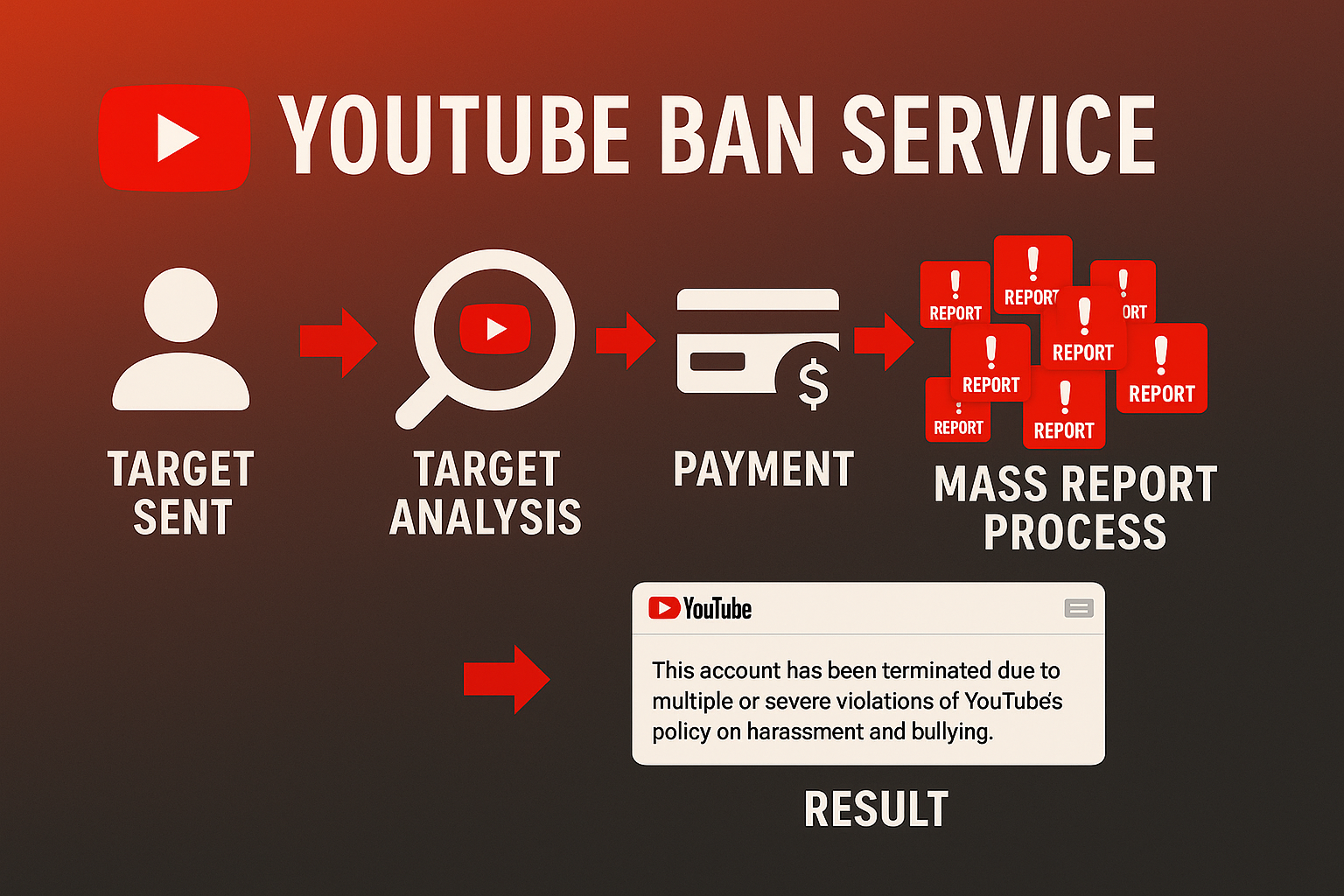
What can a YouTube ban service actually take down, a video or a whole channel?
A YouTube ban service has only two real levers, and a reviewer at YouTube controls both. One is the removal of a single video that breaks a policy. The other is pushing an entire channel toward termination. The service documents a genuine breach and routes it to the right form; it does not press a "delete channel" button, because none exists for anyone outside YouTube.
Most people arrive expecting that button: a quick way to erase a rival creator, an ex, or a channel whose content they find offensive. What they can actually buy is casework. A credible provider turns a vague grievance into an evidence-backed report aimed at the correct channel, then leaves the verdict to YouTube's moderators, who weigh each case against the platform's published rules. A dishonest one charges you for flags the platform was always going to close, then blames the outcome on YouTube.
Which YouTube violations can a legitimate ban service report?
Only cases tied to a real policy or legal breach are worth filing; the rest waste money and can rebound on you. A trustworthy service checks each request against a named rule before it opens any form, and turns down the ones that match no violation. Scam channels are the clearest example, and they are not rare. In its 2023 analysis of YouTube "stream-jacking," security firm Bitdefender traced more than 1,300 crypto-scam videos to a single phishing kit and found hijacked channels as large as 12.5 million subscribers, repurposed to run fake Elon Musk "crypto-doubling" livestreams.
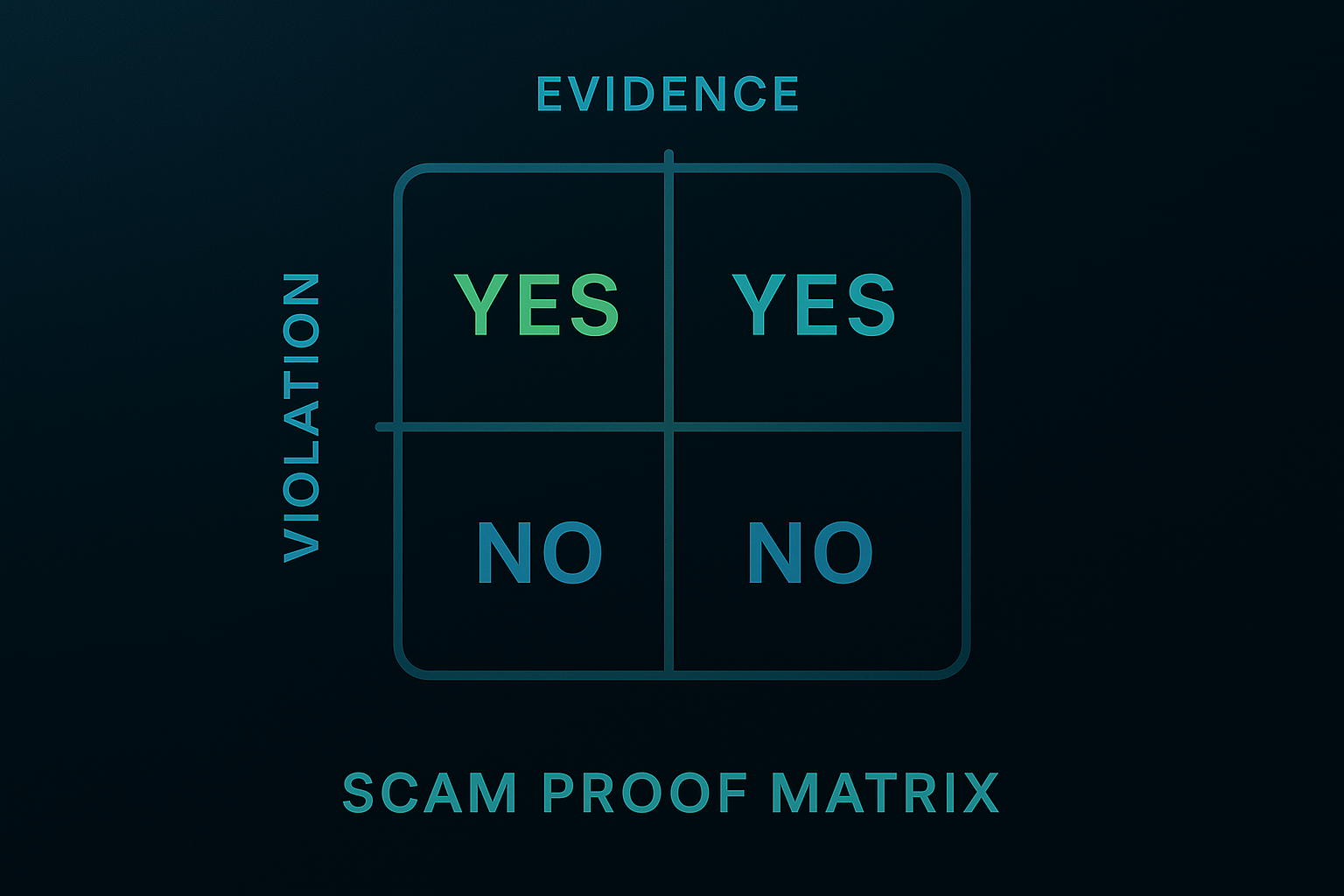
| Cases a service can report | Cases it should refuse |
|---|---|
| Scam and fake "crypto giveaway" livestreams | A creator you simply dislike |
| Hijacked or stream-jacked channels | Criticism, commentary or parody |
| Impersonation and copycat handles | A competitor you want gone |
| Counterfeit goods and brand abuse | A video you find low quality |
| Your own video reposted without a licence | Anything needing invented claims |
If your situation sits in the right-hand column, no provider and no bot will move it, because YouTube has nothing to act on. For a fraud case, the evidence bar is the same one behind any solid online scam report: a named rule, dated captures, and direct links.
Community Guidelines flag or copyright claim: which route removes the content?
YouTube runs two separate removal routes, and they are not interchangeable. The first is the Community Guidelines flag: any viewer can report content that breaks a content policy, and a reviewer decides whether it earns a Community Guidelines strike. The second is the copyright route, where the rights holder submits a formal removal request that produces a copyright strike. They sit in different ledgers, so a service has to pick the correct one before it files anything. Picking wrong is why so many DIY reports stall.
The copyright route is the stricter of the two. A copyright strike only lands when "a copyright owner submits a valid copyright removal request for your use of their copyright-protected content," per YouTube's copyright-strike documentation, and that request goes through YouTube's copyright removal webform with a legal signature. A Community Guidelines flag, by contrast, is open to anyone who witnessed the breach and is judged against the Community Guidelines.
Where Content ID fits, and why it isn't a takedown button
Content ID confuses almost everyone, so it helps to rule it out early. It is an automated system that scans uploads against reference files supplied by rights holders, then applies the owner's chosen action, usually to monetise or block the matched video. It is not a strike and it is not a complaint you can file. As YouTube's Content ID guidance spells out, those automated claims are separate from copyright strikes, which only ever come from a valid legal request. No service can trigger Content ID on your behalf, because the tool belongs to the rights holder, not the public.
How does a legitimate YouTube ban service build and file a case?
A real service runs a casework process, not a one-click trick, and most of the effort goes into making the breach undeniable before a single form is opened. The aim is a package a moderator can act on without guessing, routed to whichever official channel fits.
- Intake and policy match. You share the link and a short description; the service ties it to a specific guideline or a copyright you can prove, and declines anything that matches neither.
- Evidence pack. The channel URL and channel ID, direct video permalinks with timestamps, and screen recordings or archived captures, kept in case the content is pulled before review.
- Route selection. The case is sent to the right form, whether that is the in-app flag, the impersonation or privacy webform, or the copyright removal request.
- Correct claimant. A copyright filing is submitted by the owner or an authorised agent, since only they can sign it; a Community Guidelines flag can come from any witness.
- Follow-up. If YouTube asks for proof of identity or ownership, the service answers, then tracks the decision and any appeal window.
Prefer to file it yourself first? Our explainer on whether mass reporting works on YouTube walks through the in-app flow, and the service simply does that work to a tighter standard. The discipline carries across apps, whether you need to report a rule-breaker on Instagram, flag a TikTok account, get a WhatsApp number banned, or get an X account suspended.
What actually gets a YouTube channel terminated?
Termination is YouTube's decision, and it follows fixed rules rather than a tally of reports. On the Community Guidelines track, a first slip is usually met with a warning, not a strike; YouTube says over 86% of creators who break a guideline only ever receive that warning. After it, the ladder is strict: one strike pauses uploads for a week, a second within 90 days for two weeks, and a third inside that window terminates the channel, with each strike expiring 90 days after it was issued.
Two shortcuts bypass the ladder entirely. A single case of severe abuse, such as predatory behaviour or content dedicated to a violation, can remove a channel on the spot, as YouTube sets out in its account-termination policy. The copyright track has its own threshold: three valid copyright strikes can terminate a channel and pull its uploads. A pile of duplicate reports adds nothing to either count, because only a verified breach moves the needle.
How do you spot a fake "guaranteed YouTube ban" service?
The promise itself is usually the tell. YouTube weighs evidence, not order volume, so anyone selling a guaranteed outcome is selling something they cannot control. Treat these as walk-away signals:
- A guaranteed takedown, a fixed "success rate," or pricing sold "per 1,000 reports."
- A "secret panel" or "mass report bot" said to bypass review; no such backdoor exists.
- Any request for your password or a login code, which simply hands over your own account.
- A "free" downloadable tool, since many of these bot installers carry credential-stealing malware.
There is a darker irony here too. The same crowd advertising "channel bans" on gig sites and chat groups often overlaps with the people running hijacked-channel scams in the first place. Automating reports also breaks YouTube's Terms of Service, which forbid accessing the service "using any automated means (such as robots, botnets or scrapers)," so the panel risks your account while delivering nothing. The myth is recycled for every app, which is why a Telegram mass-report bot, a TikTok mass-report bot, an attempt to mass-report an Instagram account, or a tool to mass report a Twitter account all end the same way.
Is a YouTube ban service legal, and what should it cost?
Reporting genuine violations through official channels is legitimate; the legal risk appears only when a report is knowingly false. A bogus copyright claim is the sharpest example, because anyone who knowingly misrepresents that material is infringing can be held liable for damages under 17 U.S.C. § 512(f). Coordinated false flagging can rebound on the people organising it, and a trustworthy provider refuses retaliatory cases for exactly that reason. Anything involving credible threats or child-safety material belongs with law enforcement and YouTube's emergency reporting, never in a paid queue.
On price, judge the model before the number. An honest service charges for the work of reviewing, documenting and filing a case, not a bounty "per ban" or a guaranteed removal it has no power to grant. The same test applies to a Telegram ban service, a TikTok ban service, a WhatsApp ban service, an X or Twitter ban service, or an Instagram ban service. If you want a case sense-checked before anything is filed, our managed reporting solutions verify each one first, and you can open a case with our team to talk it through.
Hit with a strike or claim on your own channel? What to do next
- Read the notice first. YouTube Studio shows whether you got a Content ID claim, a Community Guidelines strike, or a copyright strike. Each one has a different fix, so name yours before you react.
- Dispute a Content ID claim only when you genuinely have the rights or fair-use grounds; a careless dispute can escalate into an actual strike.
- Appeal a Community Guidelines strike through the appeal link in the notice if you believe the review got it wrong, and wait for the verdict rather than re-uploading.
- File a counter-notification for a copyright strike you think is mistaken, knowing it carries the same legal weight as the original claim.
Sources
- Community Guidelines strike basics — YouTube Help
- Understand copyright strikes — YouTube Help
- How Content ID works — YouTube Help
- Submit a copyright removal request (webform) — YouTube Help
- Channel or account terminations — YouTube Help
- Impersonation policy — YouTube Help
- A deep dive into stream-jacking attacks on YouTube — Bitdefender Labs
- 17 U.S.C. § 512(f) — Legal Information Institute, Cornell Law
- YouTube Terms of Service
FAQ
Is a Content ID claim the same as a copyright strike?
No. A Content ID claim is an automated match against a rights holder's reference file, and it usually just blocks the video or redirects its ad revenue, leaving your channel standing untouched. A copyright strike is different: it only lands when an owner files a valid legal removal request, and three of them can end a channel.
Who can file a copyright takedown on a YouTube video?
Only the copyright owner, or an agent formally authorised to act for them, can submit YouTube's copyright removal request, and it carries a legal signature. A third party cannot claim content they do not own. That is the core difference between the copyright route and a Community Guidelines flag, which any viewer can file.
How many strikes does it take to terminate a YouTube channel?
Three Community Guidelines strikes inside a single 90-day window can terminate a channel, and three valid copyright strikes can do the same while pulling the uploads. A first violation is usually only a warning, but a single case of severe abuse can terminate a channel immediately, with no strikes first.
Do mass-report bots actually ban a YouTube channel?
No. A reviewer still has to confirm a genuine violation, and YouTube does not tally report volume, so a thousand automated flags achieve nothing a single honest report would not. Worse, automating reports breaks YouTube's Terms of Service and can put your own account at risk of termination.