Telegram ban service: which channels can actually be removed, and how
A Telegram ban service is a managed reporting service that documents a genuinely rule-breaking public channel, such as a scam, impersonation or counterfeit operation, and files it through Telegram's official takedown routes. It cannot delete a private or lawful channel on request. Telegram's moderators decide every removal, based only on whether the channel breaks the rules.
Which Telegram channels can actually be removed, and which can't?
Start with what Telegram will even look at, because it decides everything that follows. The platform acts on public material only: public channels with a @username and a t.me/ link, public groups, bots and sticker sets. Its FAQ is blunt about the rest, stating that "private groups and chats on Telegram are private amongst their participants" and that "we do not process any requests related to them." A channel shared by invite link alone sits largely beyond any takedown request.
So the first question a serious service asks is not what the channel did, but whether it is public. A public channel pumping fake crypto giveaways is actionable. A locked, invite-only one usually is not, however much you dislike it. This one distinction explains why some channels vanish in days while others never move, and it is worth settling before you spend a cent.
What does a Telegram channel ban service actually do?
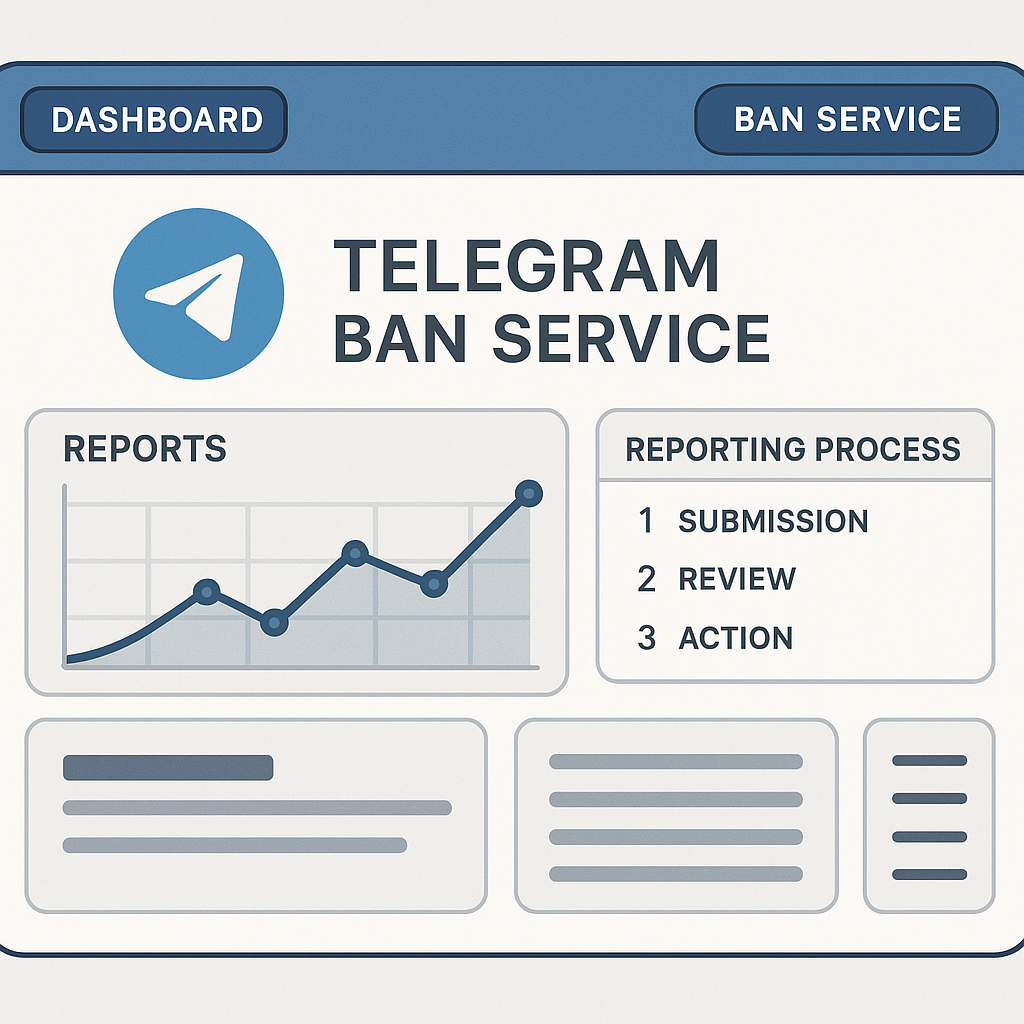
A Telegram channel ban service does the casework you would otherwise do yourself, to a tighter standard. It confirms the public channel breaks a specific rule, assembles proof a moderator can act on, and submits the case through the matching official route. It does not, and cannot honestly, promise to erase a channel you simply want gone.
The evidence it gathers is channel-level, not person-level: the channel link and @username, the pinned post, the admin-published messages that cross the line, and the pattern across several posts rather than one stray message. For a fraud channel, that is the same discipline behind any solid online scam report, documented, dated and tied to a named rule. What you pay for is judgement and packaging, not a magic ban button. A service worth its fee will also tell you when you have no case, which is often the most useful answer it can give.
What are the four official ways to get a rule-breaking channel removed?
Four routes actually reach Telegram, and a credible service picks the one that fits instead of firing at all of them at once. Telegram is not short of enforcement capacity: its moderation page states the platform "blocks tens of thousands of groups and channels daily and removes millions of pieces of content," combining user reports with machine-learning monitoring it has run since 2015. The lever that moves a case is matching a real violation to the right channel below.
| Removal route | Best for | Who files it |
|---|---|---|
| In-app Report (channel menu) | Spam, scams, violence in any public channel | Anyone who can open the channel |
| @NoToScam | Impersonation of a person or brand | The person or brand impersonated |
| [email protected] / [email protected] | Illegal content; copyright or counterfeit | Rights holder or representative |
| EU DSA notice | EU users; faster trusted-flagger review | EU residents and vetted flaggers |
For impersonation, message Telegram's @NoToScam account with proof; for illegal content email [email protected], and for copyright or counterfeit use [email protected], both listed on Telegram's official FAQ. Sending one case to the correct route beats scattering the same complaint everywhere.
Removed or just hidden? What a Telegram channel takedown looks like
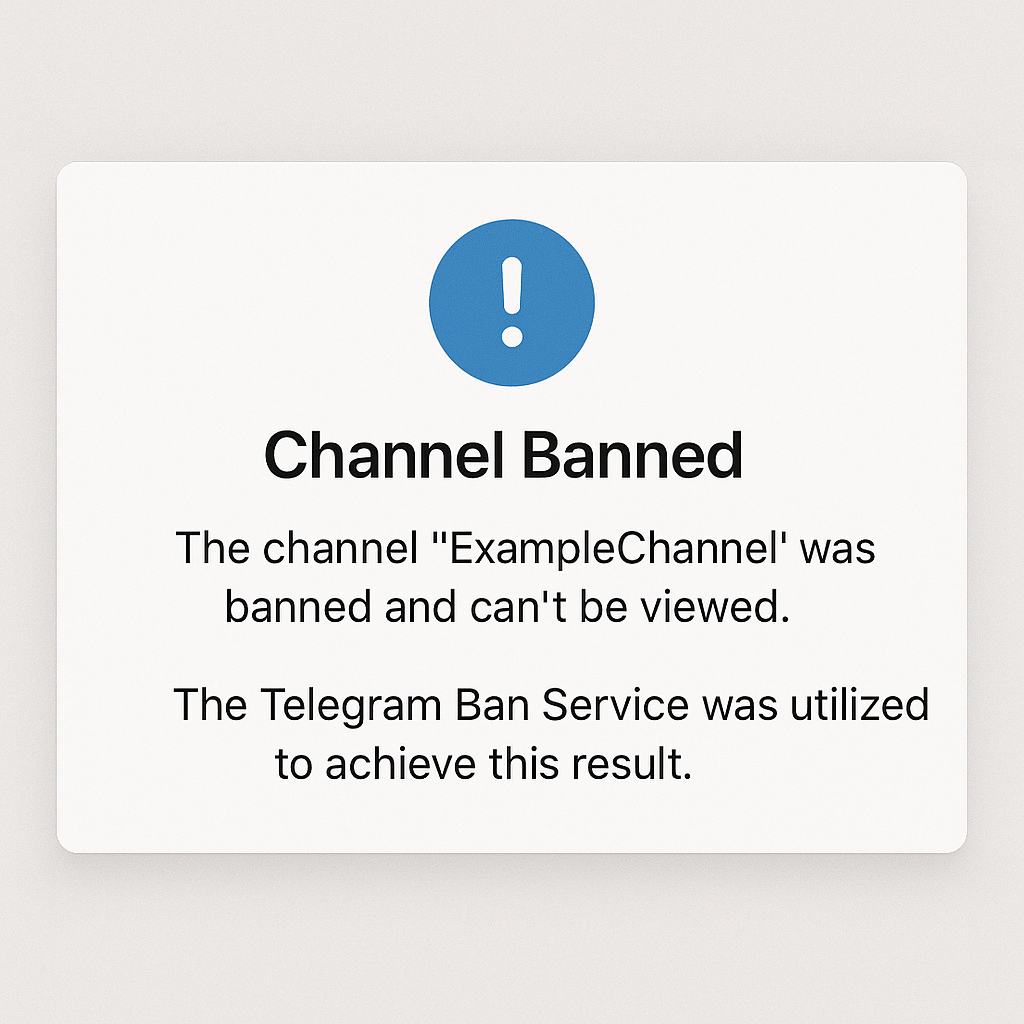
A takedown does not always mean deletion. A channel can disappear in three different ways, and knowing which one you got tells you whether the problem is truly solved. The cleanest outcome is a global removal: the link dies and the channel opens to a blunt "this channel can't be displayed" notice for everyone.
The second outcome is partial. Telegram can geo-restrict a channel only on the Google Play and Apple App Store builds of the app while leaving it reachable elsewhere, the route it took in November 2023 when it limited certain channels on the app-store versions rather than deleting them outright. The third is narrower still: a DMCA claim that strips specific infringing posts. Removal also rarely kills the content for good. Operators clone a banned channel under a fresh link within hours, and forwarded copies live on in other chats, so one takedown is often the start of a cycle rather than the end of it.
How long does it take, and does the number of reports matter?
Telegram publishes no per-case deadline, and the count of reports is not what decides the outcome. A channel that breaks a clear rule can come down in a day or two, while a contested impersonation claim that needs identity checks runs longer. Piling on complaints achieves nothing by itself: fifty reports about a channel that breaks no rule end the same way one does, because a human reviewer still has to confirm a genuine breach. That is precisely why a paid Telegram mass-report bot cannot close a channel for you.
What does shorten the wait is making the reviewer's job easy:
- One clear violation tied to a named rule, not a vague grievance.
- Direct
t.me/links to the offending posts, not only screenshots. - Dated captures kept in case the channel is deleted before review.
- Proof of identity or trademark when the complaint is impersonation.
EU residents hold one extra lever. A notice filed under the Digital Services Act must be reviewed, and notices from vetted "trusted flaggers" are prioritised, often within about a day.
Can you pay for a Telegram ban service, and how do you vet one?
You can pay for a Telegram ban service, but be clear about what the fee buys: the work of reviewing, documenting and filing a case, never a guaranteed outcome. Telegram makes the final call, so any seller promising a certain ban is selling something it does not control. Treat the pricing model as the first test. Honest providers charge for casework; scam sellers quote a flat price "per channel banned," a fixed success percentage, or sell reports in bulk.
A few signals separate the two quickly:
- Walk away if a seller guarantees a ban or quotes a success rate, charges a bounty per takedown, claims to "bypass" Telegram with a secret panel, or asks for your phone number and login code, which hands over your account.
- Trust the ones that file only through official routes, require real evidence, refuse lawful or private channels, and explain the limits before taking your money.
If you want a case checked before anything is filed, our managed reporting solutions verify each one first. The same vetting logic travels to other apps: see how a managed TikTok ban service handles it, or the do-it-yourself routes for Instagram and X or Twitter.
Is it legal and safe to report a Telegram channel?
Reporting a channel for a genuine violation is legitimate and low-risk. The danger sits on the other side: knowingly filing a false report, or a bogus copyright claim, can rebound on you. Under U.S. copyright law, anyone who knowingly misrepresents that material is infringing can be liable for damages under 17 U.S.C. § 512(f), and Telegram can disclose account data to authorities on a valid legal order. Anonymity is thinner than the sales pages imply.
This is why a trustworthy service refuses retaliatory or fabricated cases; the policy protects you as much as the channel owner. Genuine emergencies, such as child-safety material or credible threats, belong with Telegram's dedicated reporting and the police, never in a paid queue. None of this is unique to Telegram, either. Whether it is a scam contact on WhatsApp or a rule-breaking TikTok account, the principle holds: real violations get actioned, invented ones do not. If you would rather hand a verified case to a team, bring us the details and we will route it through official channels only.
What if your own Telegram channel gets reported or pulled by mistake?
Honest channels do get caught in the net, usually after a wave of bad-faith reports or a misread post. If yours opens to the "this channel can't be displayed" notice, the fix is the same official process, run in reverse. Write to [email protected] from a calm position: give the t.me/ link, explain plainly why the channel follows the rules, and add context for any post that looks borderline. Keep your own dated screenshots, since you may need to show what was actually published. Reviewers weigh the content, not the volume of complaints against you, so a measured appeal beats a panicked one.
Sources
- Telegram moderation page (daily takedown figures + how moderation works)
- Telegram FAQ (public vs private content, abuse@ and dmca@ addresses)
- @NoToScam — Telegram's impersonation and scam reporting account
- Trusted flaggers under the EU Digital Services Act — European Commission
- Telegram restricts channels on Google and Apple app stores (2023) — Al Jazeera
- 17 U.S.C. § 512(f) — Legal Information Institute, Cornell Law
FAQ
How do I report a Telegram scam channel?
Open the public channel, tap the menu, choose Report, and pick Scam, attaching the t.me link and dated screenshots. For fraud or impersonation you can also message the @NoToScam account or email [email protected]. One well-evidenced report counts for more than dozens of empty ones.
How do I report a Telegram channel for impersonation?
Message Telegram's @NoToScam account with proof you are the real person or brand: your verified handles, a government ID, or a trademark registration, plus the impersonating channel's link. Identity checks make these cases slower than plain spam, so send the evidence up front.
Can you report a Telegram channel for copyright or DMCA?
Yes. A rights holder or their representative can email [email protected] with the channel link and proof of ownership to remove infringing posts or a whole channel. Filing a copyright claim you know to be false can expose you to legal liability, so use it only for genuine infringement.
Will the channel owner know who reported them?
No. Telegram does not reveal who filed a report; a moderator reviews the content privately and acts only if it breaks the rules. Your identity is not shared with the channel or its admins.
Can a banned Telegram channel come back?
Often, yes. Operators spin up a fresh channel under a new link within hours, and forwarded copies survive in other chats. A takedown removes the original, but persistent abusers usually need repeated, evidenced reports rather than a single one.