How to mass report a Twitter account — and what really works on X
To mass report a Twitter account, several people each report the same rule-breaking posts or profile through X's official tools and pick the exact violation — spam, impersonation, abuse, or threats. X acts on whether the content genuinely breaks a rule, not on how many reports pile up, so accuracy beats volume.
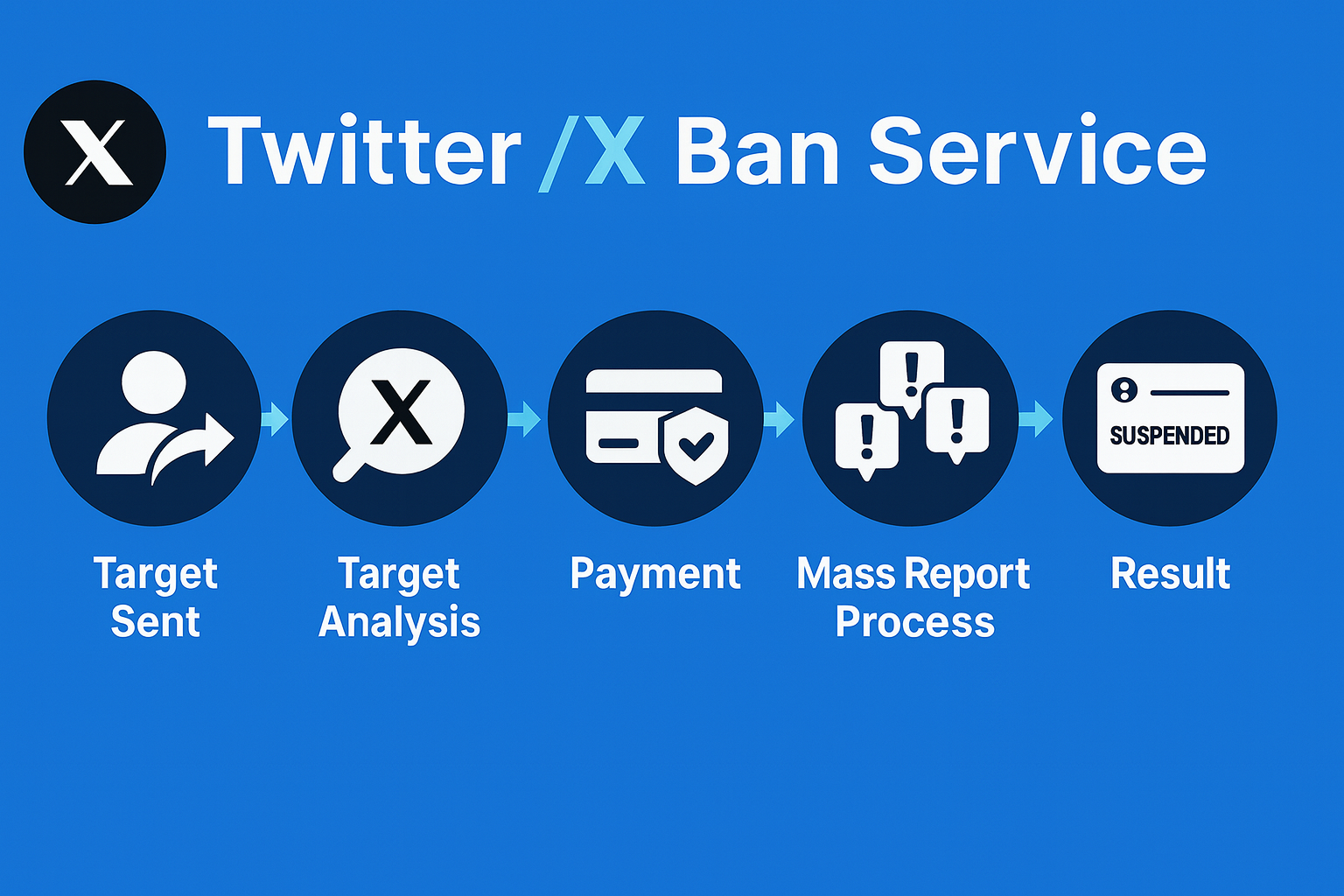
What is mass reporting on Twitter, and how is it different from one report?
Mass reporting on Twitter (X) is when many accounts file complaints against the same profile or set of posts at roughly the same time. The label hides two very different things. One is a group of real people who each witnessed a genuine breach and report it independently. The other is brigading: a coordinated push to bury a target under complaints whether or not a rule was actually broken.
That distinction matters because only the first kind survives review. The Tony Blair Institute defines brigading bluntly — it describes mass reporting as a "brigading group" trying to get users "suspended from an online platform by collectively reporting their posts," per its research on online brigading. Whether someone searches for "mass reporting on twitter," "mass report twitter account," or even the common misspelling "mass report twitter acount," the practical question underneath is the same: can a crowd force X to act? Mostly, no — and the rest of this guide explains why, then shows the version that does work.
How do you mass report a Twitter account the right way?
The right way is for each person to report the genuine violation themselves, through X's built-in tools, choosing the category that truly fits. There is no group button to press; "mass" simply means several honest reports about the same real problem. Here is how to mass report a Twitter account, or report someone on Twitter individually, using the current X flow:
- Open the offending post or profile. On a post, tap the icon at the top of it; on a profile, tap the three-dot more menu — then choose Report, as X documents on its report a post help page.
- Say who the report is for — yourself, someone else, or everyone on X — then pick the precise issue: spam, impersonation, abuse or harassment, hateful conduct, or a violent threat.
- Add more posts when X offers. It often lets you attach extra posts from the same account; that context strengthens one report far more than a second account filing a copy of it.
- For spam with no single post — an account mass-following or flooding mentions — report the profile as spam instead. For a fake or scam profile, use X's impersonation form, which does not even require you to have an account.
- Submit, then leave it. Re-filing the identical complaint over and over is the behaviour X polices, not the behaviour it rewards.
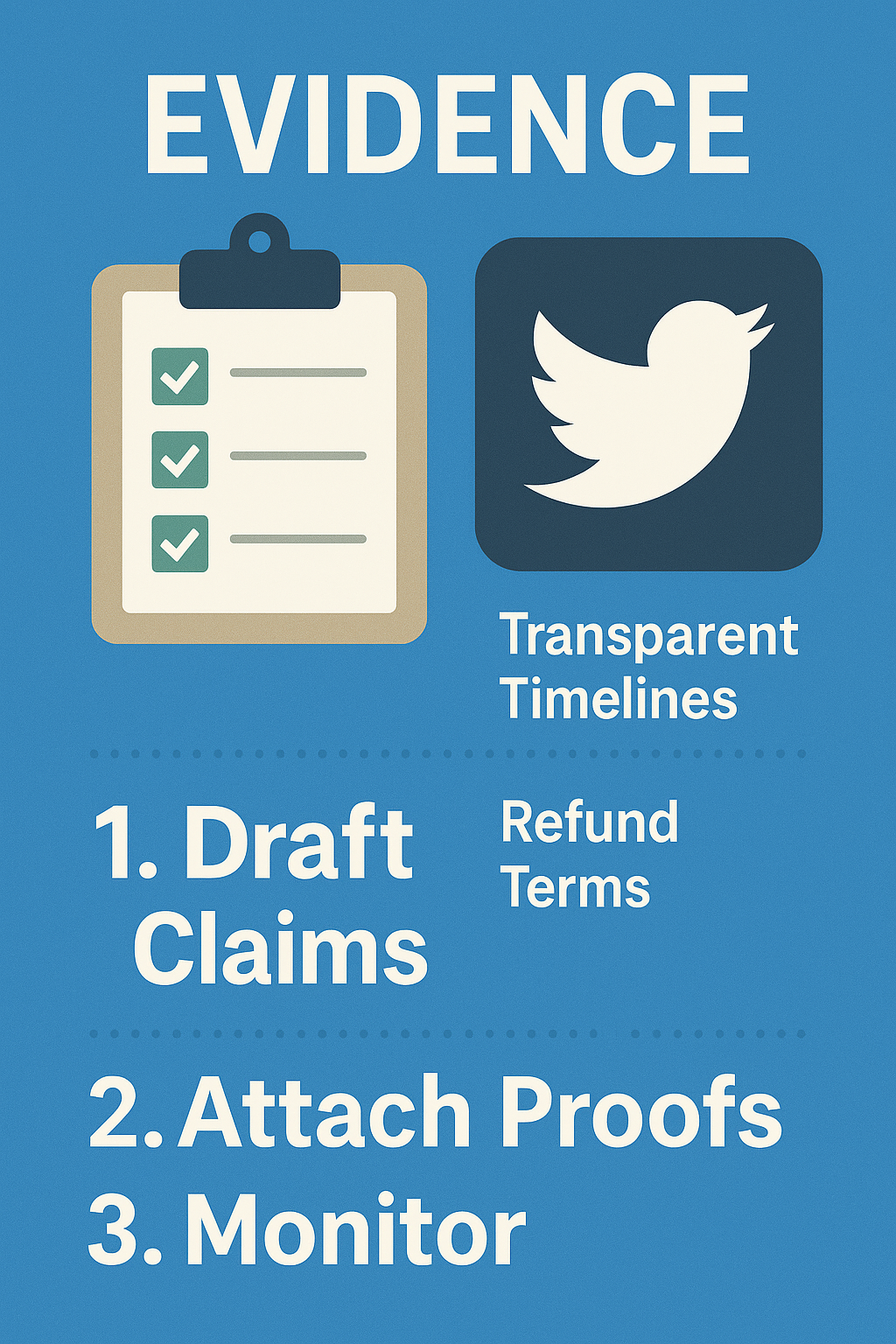
X has no bulk or multi-account reporting feature, and Safety Mode only auto-blocks abusive accounts for you — it is not a takedown tool. So the honest approach to mass report spam on Twitter mirrors the evidence discipline behind reporting an online scam: gather permalinks, screenshots and the exact rule, then have each genuine witness report a rule-breaking account on X on its own.
Does mass reporting actually work on Twitter?
Not the way the sellers imply. Stacking up reports does not force X to suspend anyone, because the platform weighs whether each report is actionable rather than counting how many arrived. Its Misuse of Reporting Features Policy describes assessing reports against actionable and inactionable rates as a share of overall volume — a system keyed to validity, not headcount.
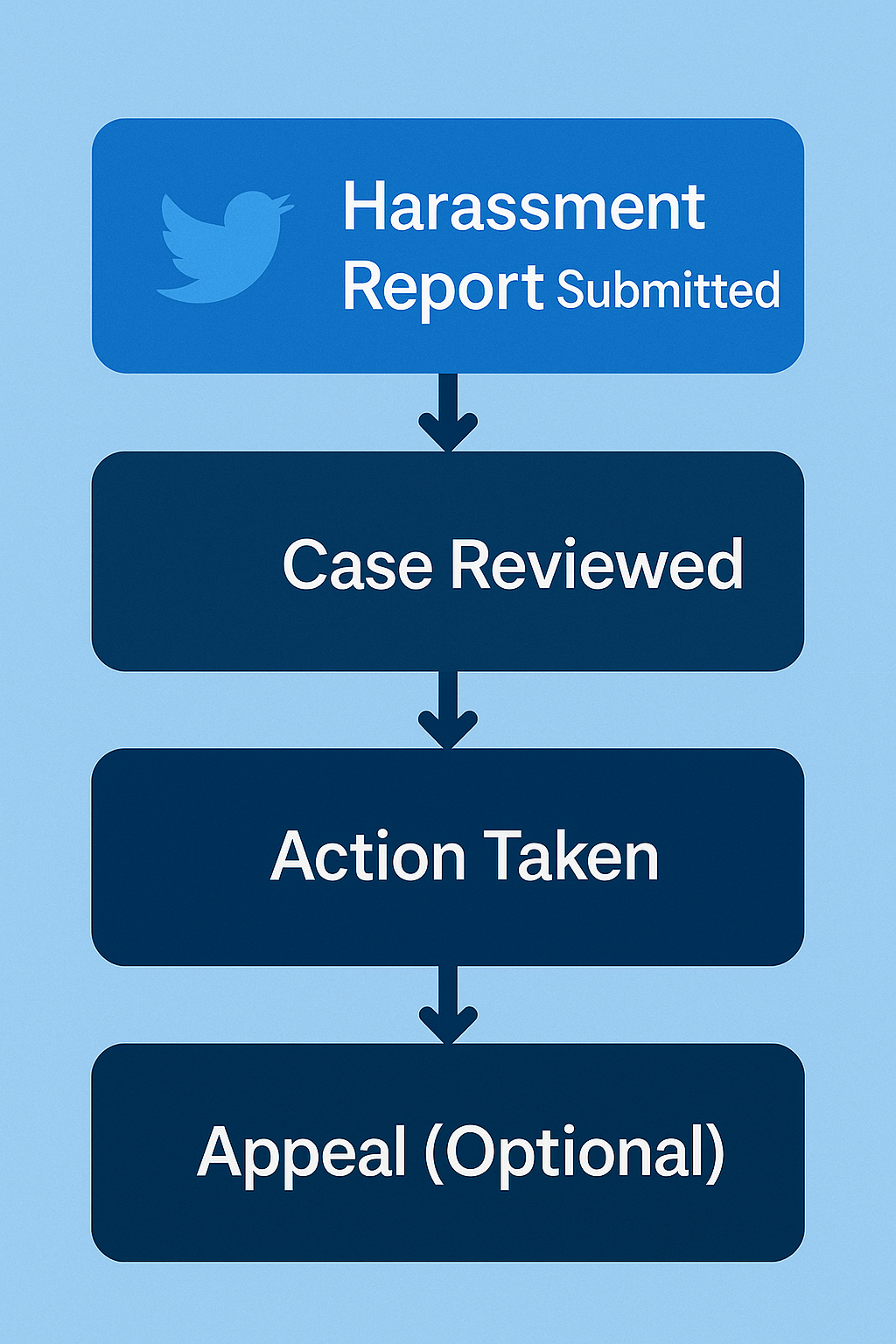
So five hundred complaints about a tweet that breaks no rule add up to nothing, while one well-documented report of a real scam can be enough on its own. The futility of brigading with throwaway profiles is visible in X's own numbers: it says it suspended around 800 million accounts during 2024 for spam and platform manipulation, according to Engadget's report on X's transparency data. The disposable accounts a mass-report campaign runs on are precisely what those systems are built to delete first.
Is there a Twitter mass report bot, and are the free ones safe?
A Twitter mass report bot exists as code, but none can force a ban, and the "free" downloads are the riskiest of the lot. You will find one as a GitHub script, a hosted online panel, or a mass report Twitter account bot bundled into a social-media marketing dashboard. Vendors rename the same idea endlessly — a mass report Twitter bot here, a "Twitter mass report tool" there — yet every version hits the same ceiling: a reviewer still has to find a real violation. Worse, automating bulk reports is itself bannable, since X's rules cover filing large numbers of reports through automation.
Then there is the malware angle. A free Twitter mass report bot that asks you to log in or paste a session cookie is usually hunting your credentials. Kaspersky traced a campaign it named GitVenom — hundreds of fake GitHub projects posing as bots and automation tools that planted password stealers and crypto-wallet hijackers, netting attackers roughly $485,000, in its February 2025 disclosure. The identical code gets rebranded as a Telegram mass report bot or a TikTok mass report bot, with the same empty result.
Why coordinated reporting backfires: from "Jeffree Star fans" searches to X's 2021 overhaul
Coordinated reporting tends to rebound on the people running it. Search interest in phrases such as "jeffree star fans mass report twitter" reflects a widespread belief that celebrity fan armies can brigade a target off the platform. That belief outruns the evidence; there is no credible public record of that particular campaign succeeding. The documented risk, though, is real — and it cuts the other way.
In late 2021, Twitter publicly admitted its reporting system had been gamed by coordinated complaints that wrongly suspended activists and researchers, and it rebuilt the report flow in response. "We were informed of a significant number of malicious and coordinated reports, and unfortunately our teams made several mistakes," the company told Euronews. The lesson sellers never mention is that a false brigade can sweep up innocent people and expose the organisers, who X can challenge, throttle, or suspend. That dynamic is platform-wide: the same logic applies whether people try to get a rule-breaker banned on Instagram, report a TikTok account, or get a WhatsApp number banned. Each platform now weighs the report, not the crowd behind it.
Can you buy a Twitter mass report service, and what do you get?
You can buy mass report Twitter packages in minutes; what you cannot buy is a guaranteed suspension. Marketing panels sell a Twitter mass report service by the thousand, and done-for-you operators will run a buy-Twitter-mass-report-bot job against a named handle. In practice you are paying for the look of action — a burst of complaints X always intended to judge on merit. The table sorts the realistic options.
| Option | What it actually does | Main risk |
|---|---|---|
| Genuine reports from real witnesses | Each truthful report adds context to a real violation | None, as long as every report is honest |
| Free bot or GitHub script | Fires duplicate reports X is built to ignore | Credential theft, malware, your own suspension |
| Paid "mass report" marketing panel | Often files nothing; sells raw volume | Wasted money; trades in banned fake engagement |
| Vetted official-channel service | Documents a genuine breach and files it correctly | Only works when a real violation exists |
Two things usually hide behind a paid panel: operators who pocket the fee and submit nothing, since you can rarely verify what was filed, and sellers of fabricated engagement, which the U.S. Federal Trade Commission's 2024 rule now treats as unlawful in its ban on fake reviews and bot-driven engagement. A legitimate operation runs the opposite way — the same principle behind a reputable Telegram ban service or TikTok ban service: prove a real breach, never manufacture one.
What should you do if your Twitter account gets mass reported?
If you have not broken a rule, a wave of reports against your own account usually changes nothing. Because X looks for a genuine violation before it acts, a pile-on with no rule to point at tends to dissolve on its own. Mistakes still happen — automated review occasionally pulls a legitimate post — and the fix is the appeal, not panic.

A few practical points. X acknowledges a report within 24 hours and usually resolves it within days, though it can take up to 30. You will not be told who reported you, because reporting is anonymous by design. If a post is removed or your account is locked in error, file the in-app appeal and keep your original files as proof, and switch on Safety Mode to auto-block accounts behaving abusively while you sort it out.
When the case is genuine but tangled — a persistent impersonator, a fast-moving scam ring, or a wrongful suspension you cannot reverse alone — you can get help building the evidence and filing through the correct routes. We verify every case first and act only on real violations. See our official reporting solutions or tell us what happened.
What if the offending post or account vanishes before X reviews your report?
On X this happens often. A scammer deletes the tweet, switches the handle, or deactivates the account the moment people start reporting, and a live link to nothing weakens your case. Capture the proof before it disappears: open each post, copy its permalink from the share menu, and screenshot the full tweet with the handle, the timestamp, and the URL bar all visible in one frame. Note the numeric account ID too, since a display name can change while that ID stays fixed. For impersonation, the form accepts your evidence even after the profile is gone. If you would rather hand a tangled case to people who do this daily, tell us what happened.
Sources
- How to report a post — X Help Center
- Misuse of Reporting Features Policy — X Help Center
- X suspended ~800 million accounts in 2024 for spam and manipulation — Engadget (2025)
- Twitter overhauls reporting after coordinated misuse — Euronews (2021)
- Malware hidden in fake GitHub bots and tools (GitVenom) — Kaspersky (2025)
- What is brigading? — Tony Blair Institute for Global Change
FAQ
Can you see who reported your Twitter account?
No. Reports on X are anonymous, and the account you report is never shown your identity. The one narrow exception is a copyright or trademark complaint, where your details may be passed to the other party as part of the legal process.
How many reports does it take to suspend a Twitter account?
There is no fixed threshold. X does not suspend accounts by tallying reports; it acts when a report shows a genuine rule violation. A single, well-evidenced report can trigger a suspension, while thousands of empty complaints about rule-abiding content will not.
Is a free Twitter mass report bot safe to use?
No. A free Twitter mass report bot cannot force a suspension, and the download is a common malware and credential-theft trap. Filing bulk reports through automation also breaks X's rules and can get your own account permanently suspended.
Is mass reporting against Twitter's rules?
Yes, when it is coordinated and false. X's Misuse of Reporting Features Policy prohibits submitting duplicate or false reports in large numbers and organising others to do the same. Reporting genuine violations you witnessed is fine; brigading a target is not.
How do you stop your Twitter account from being mass reported?
You cannot block people from reporting you, but you do not need to if you follow the rules, since a pile-on with no real violation rarely leads to action. Turn on Safety Mode to auto-block abusive accounts, and appeal any wrongful penalty with your original files as proof.